







Thai Union-Building a Sustainable Business with Digital Enablers
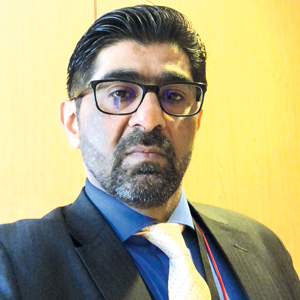
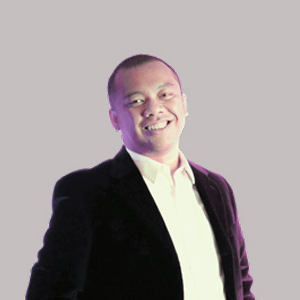
Rajiv Kakar, Group CIO, Thai Union Group PCL.
Thai Union is one of the worlds largest seafood processors. Their footprint across manufacturing and commercial trading extends the length and breadth of Europe and North America, with production facilities in Ghana, Seychelles and Thailand and emerging businesses in Indonesia, China and the Middle East. The IT estate for Thai Union is managed under one umbrella group consisting of 2 core functions. A team that look at the applications and business processes called CBI (Continuous Business Improvement) and another function that looks at our IT Infrastructure. Collectively these 2 teams cover the entire footprint of IT services for the group.
The Big Transformation
Thai Union emerged as a seafood behemoth through a string of acquisitions that that started in earnest during the periods 2011-2015. During this period of phenomenal growth through mergers and acquisitions, the group acquired a vast portfolio of branded seafood businesses from what was originally owned by conglomerate HJ Heinz. The resulting acquisitions required an extensive revamp of IT infrastructure and applications to bring out the synergies of operating as One and a Business Transformation program was born and kicked off circa 2016. Through a 5-year transformation, the group has consolidated all the local and regional ERPs into a single instance. This single instance provides standardization through harmonized processes. This resulted in an overwhelming change in the way the business is run. With 90 percent of our business under one ERP, we operate with better efficiency, agility and performance with the added benefit that we have a better control on our SG&A costs, inventory positions and manufacturing efficiency. However, the journey has not been without any challenges. Getting process harmonization across well established and mature businesses process, notwithstanding deeply entrenched ways of working and a general ambivalence towards standardization did cause initial turbulence but the group has largely overcome these challenges and emerged stronger as a whole. We were also able to deploy change management disciplines across the business to ensure adoption was achievable, albeit with extra time and effort and support from the executive stakeholders. One of the challenges the group faced was also culturally related – whereas some cultures work more on consensus within the group whereas other have a more decisive and pragmatic oriented approach. Blending these cultures while ensuring no one gets left behind was done through various mechanism but what we found most successful was in setting up user groups and forums for sharing of knowledge, experience and issues across the business, directly between business stakeholders.
Once the digital transformation project was well underway there was a question on how to reduce the group’s digital debt. Application rationalization and the journey to cloud has allowed the group to realise cost savings by retiring and repurposing our application portfolio, moving more functionality to the ERP and critical applications while also ensuring that the application portfolio pivots into the cloud. Although the application portfolio is small – on average we have around 250+ applications, our size and complexity of the business based on best practice show a near optimum of 100 applications in the group portfolio, The group is 20 percent into this and we have a comprehensive roadmap to move atleast 70 percent of the remaining footprint into the cloud by 2025.
Robotic Process Automation, IoT, Big Data& Sustainability
Group IT has also been busy with new initiatives and following technology advances. As Thai Union is a manually intensive business there was a huge opportunity with Robotic Process Automation. In 2020 during the pandemic, the IT teams took to working with the Shared Service Accounting team to develop robotic processes as a test bed for certain finance functions. The pilot was incredibly successful, and this gave the impetus to go after RPA in a much bigger way by gradually covering some of the other functions and departments such as Engineering, Supply Chain and Warehouse Management. In 2022, we decided to build a Centre of Excellence for RPA to allow us to scale our efforts across geographies.
Another illustration of the relevance of technology has been the progress we have made in the area of sustainability. The group has invested in big data technology that allows us to measure and collect data that helps us build insight on the packaging we use in our finished goods, the quality and reusability of packaging used, and this helps us inform on how we can further develop and advance our understanding on the impact of plastic usage in our products and find ways to introduce new and innovative and environmentally friendly packaging solutions. The packaging analytics solution was developed as a sidekart to the existing BI solution that came with our ERP. As our ERP already contained more than 80 percent of the data, it was just a case of repurposing the data that was already there. We have also implemented a blockchain to manage the track and trace of our products from ocean to plate; to inform our consumers which waters we source our fish from and ensuring transparency of the fleet operations and the timeliness of getting our products into manufacturing in as timely a way as possible.
-
Through a 5-year transformation, the group has consolidated all the local and regional ERPs into a single instance
Our big data engine is currently looking at the plethora of data that exists in our factory floor. Through the use of IoT sensors we are able to capture information about the production process, allowing us to adjust operating parameters in real time. We have developed an incentives module that allows us to have a way of understanding how our shopfloor workers should be rewarded based not just on production throughput but also on qualitative measures such as speed and efficiency in the cleaning process and done in real time by shift. This would not have been possible without investing in real time analytics and data collection software.
Future Business Directions
External factors, headwinds from geopolitics, new initiatives also lean heavily on IT. As the group embarks on new initiatives in the areas of alternative proteins, life sciences and other lines of business we are constantly working to introduce new technology to the business, always mindful that IT can really shape a business in its formative stage.

